In Search of The Monster, or: Do A Little Dance
The "Horrific & Hysterical" true tale of our mom's plan to save us from a homicidal father. Guest appearances by Liz Taylor, Raquel Welch, and lots of crocheted bikinis.

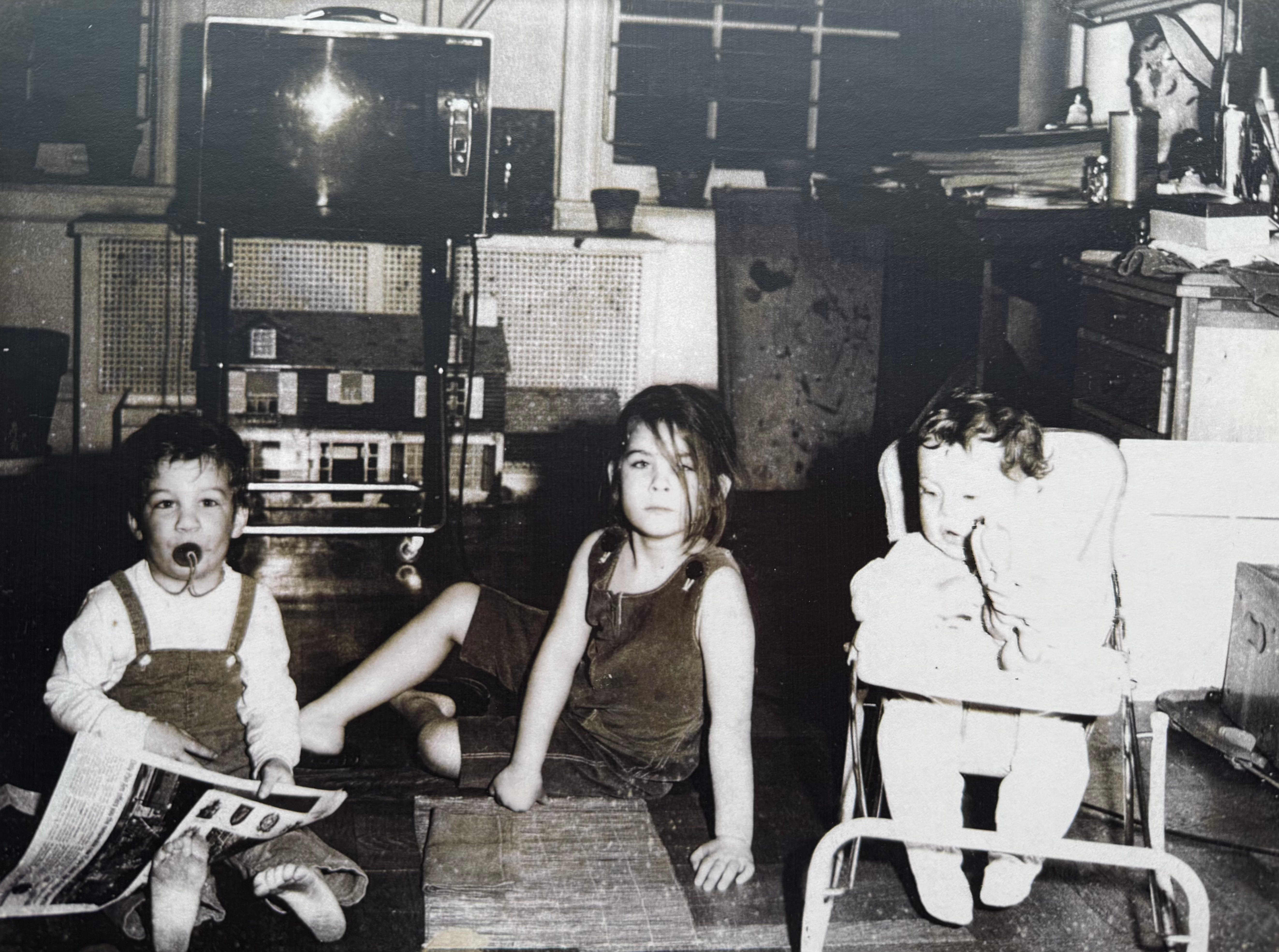
Family photo 1963
A true story by Jeremy Baumann
Note: All living persons chose their pseudonyms except The Monster.
I’m driving far too fast down this country road to the town of peace and love--Woodstock NY--to confront my elderly father. My biological father. The Monster. TM for short. This drive has been years in the making since my friend and producer Lydia Von Stretch Claw (Stretch) first pitched a documentary about my mother. My clothes feel like steel plates around my body and it seems my head is covered in plastic wrap, so clearly I’m not in my right mind. Would TM try to shoot me? Is that infanticide? I haven’t been an infant for a long time. Everything about this trip feels wrong. My other good buddy, Beef—a big, retired NYPD cop--is supposed to be with me for backup while posing as my cameraman for this potentially dramatic reunion, but he’s been ill for weeks and I can’t wait any longer. If I do, I’m sure to find TM will have died just before I arrived. Raquel Welch died recently, a reminder that all the key players in our story may not live forever, so every minute counts. And I don’t think TM will shoot me. I doubt it. Probably not?
None of TM’s kids or ex-wives have talked to him in 25 to 35 years and we have no idea if he’s alive or dead. What I do know is Stretch said our documentary about my mother, Mom Anonymous (Mom) and her place in fashion history can’t move forward without TM’s signature, because he shot many of the key photos of her garments in the 1960s and… it’s a long story. Let’s start with Mom.
- Circa 1938, West Village of NYC
Mom was born and raised in Manhattan, the bookish but beautiful middle child of three. Her parents had a furrier shop in Greenwich Village where she learned to make her own clothing at a young age. At 18 she met a smart, funny, handsome and talented photographer who lured her to the roof of a brownstone and there on Tar Beach she posed for him. They were married a bit less than 9 months before my big sister Gwen was born, then along came my brother Sterno in ‘61, and me in ’63. The folks were barely 25 years old at that point, when our father’s mental illness and abusive nature appeared all at once.
After TM’s AM/FM radio began talking to him and his typewriter began writing letters to him, he threatened to kill us all and he was institutionalized several times. It was during one of these trips away that Mom hatched a plan to escape her now untenable marriage: first she’d learn to crochet clothes, then she’d sell her garments to boutiques, and finally that income would fund her divorce and support her and us kids. Remarkably, her rather unconventional plan went well, apart from one hiccup: while the boutiques wanted as many of her garments as she could make, they required professional photographs of Mom’s covers, dresses, and bikinis for brochures, press, and advertisements.
Since at this point TM was out of the Nut House, as he called it, Mom hired him to shoot models in her garments. He agreed, did the shoots and then of course presented her with a bill for his time, film, and prints, many of which were produced by Sid Kaplan, a legendary photo printer of the 1960s and 70s. But this all leads to a question now, over a half-century later: who owns the rights to these photos? With no signed contract we can find, legally it means they are TM’s intellectual property and Mom could only use the prints she possesses. Or possessed. Mom died in 2016.
Now, if TM is dead, he could have left his rights, the copyright, to anyone. Or no one, and if he didn’t leave a Will, then NY State would decide who gets what and likely us kids would be given the rights. But that could take years to sort—and where are the negatives and his prints now? Stretch thinks that if TM is dead, he probably left his rights to a cat rescue shelter just to spite his own children for disowning him.
But how did we even get here with Mom’s crochet option and what does Raquel Welch have to do with anything? Well, taking a step back into the 1960s, there were a lot of single moms around. We lived in NYC until I was 13 and while I recall all the macrame accessories Mom made us, I only remember one kid whose dad lived at home in all those years. Courts were lax on enforcing child support, so moms often turned to things like daycare, nursing, housecleaning, or handicrafts to pay the bills, just like ours did. What made Mom’s story unusual was the success of the plan she hatched: that within a year of her learning to crochet, the pieces she made were being carried by popular boutiques like Henri Bendel, Vidal Sassoon, Abracadabra, Julie’s Artisan’s Boutique, and Outrageous. Soon after came photos and articles in and on the covers1 of magazines like Cosmopolitan, Vogue, Harper’s Bazaar, Playboy, Mademoiselle, and even the New York Times that wrote about her and her sexy clothing. People like Liz Taylor, Raquel Welch, and Nancy Sinatra were wearing her risqué dresses, covers, and mostly see-through bikinis. Top models like Carmen wore her garments, long before she sadly lost untold amounts to Bernie Madoff and returned to modeling in her 80s and 90s.


And yet, despite how glamorous that all might sound, we were still broke and on welfare and food stamps since all the fees and commissions left little money in Mom’s pocket and she could only make so many items in a month. But credit where credit is due--she was paying me 10 cents an hour for Pop Tart money (during the OG Blueberry and Cherry pre-frosting days) to tie knots for her when I was around 5 years old. And working for Mom seemed so simple and easy compared with our post-divorce visits to TM’s apartment, where my big brother Sterno and I didn’t know how to act around the ever-present naked models and all the drugs and unpredictable behavior.
“[Mom is] a shy pretty girl who never wears the clothes she turns out… they’re not her type at all,” wrote the World Journal Tribune in an article describing mom’s fashion debut at a tea party thrown by Richard Burton’s wife for a who’s who crowd. Columnist Ruth Preston wrote our mom was “…a tiny little girl with huge dark eyes who could pass for a teenager.” Yeh, well, that tiny little girl was now single again and making up for lost time by dating skinny, chain-smoking, Jesus-looking rock star types. But before she could get too settled down with one of her young Ted Nugent lookalikes, another big change was in store for Mom and her social life.
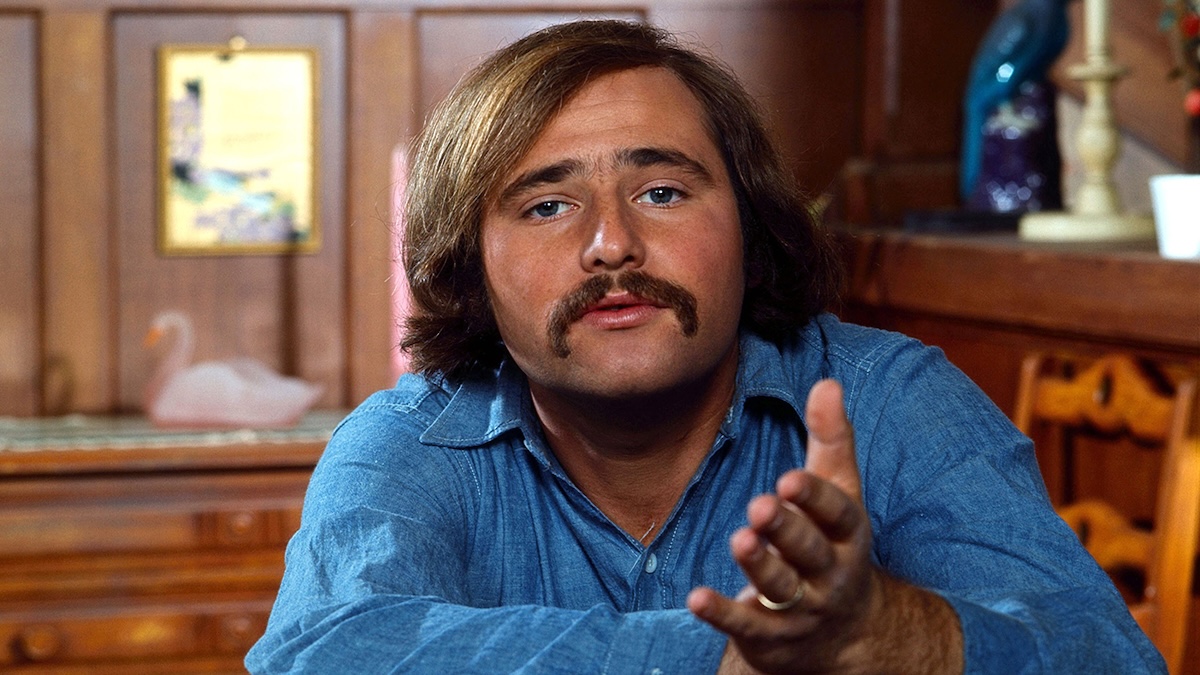
My big sister got tired of our mother bringing home “random dudes from bars,” as Gwen called them and, taking the lead, she ordered Mom to knock it off and date this nice mensch named Josef that Gwen knew from her catsitting job upstairs from us. Josef had been staying with relatives in our Upper West Side apartment building while working on his master’s degree--and he was more Rob Reiner than my mom’s usual kind of guy, but my sister adored him and wouldn’t let it go. The challenge was great, though... in addition to type issues, Josef was also a decade Mom’s junior, so Mom made it clear that dating this guy was-not-happening. Undeterred, Gwen badgered and persisted until a dinner was finally arranged with Josef just to put the subject to rest, and on that date night my then-14-years-old sister stayed up late for a full report..
When Mom arrived home she broke the predicable news that Josef was a really nice guy but simply not her type, and that Gwen was too just too young to understand that.
The ingénue listened, looked around our roach-infested run-down apartment, and said: “Oh, I get it mom—but look where your type has gotten us so far.”
And with that, a second date was scheduled that apparently went well, because soon after Josef moved in with us. We all shared our government cheese while he was in school, then in ‘76, with a master’s in public health in hand, he asked my mom and us three kids to marry him and we all said yes. We moved to the Chicago suburbs where Josef had landed a job running one the city’s largest teaching hospitals, and then came a little one for he and Mom—a beautiful lucky baby who would never know the squalor and challenges of our childhoods.
We were fortunate to leave behind a life of poverty and want, having traded up to a suburban middle-class life. Mom’s worn-out leather sample portfolio was buried away in a closet, since she no longer needed to crochet and macrame until it wore the cartilage out of her fingers. Nor did she stay up for days working on projects like a 26-foot long macrame wall hanging she had to make in less than a week on the for a hotel opening2, in order to pay our electric bill. She instead was now free to travel the world with her mother, also a NYC artist, to join art tours in far-off countries. She had the luxury of learning art forms she was intrigued by, like beading, miniatures, chocolate and cakes, and many other mediums.


But despite things going well for decades in their new life, there had been a lingering problem that was getting worse over time: early in their relationship, Mom had contracted Hepatitis B and C from blood transfusions required after an ectopic pregnancy. And despite never having a drink in her life, the cirrhosis caused by tainted blood she received at the hospital eventually caught up to Mom in 2016.
She had 47 wonderful years with the really nice guy who—at least for the first date—just wasn’t her type.
And Mom died at home with us all around her.
--
When Mom died, the Chicago newspapers ran full-page obituaries along with photos of some of her many garments and artworks from back in the day. Some of my parents’ friends and neighbors of a half century were stunned to learn that our mom had created work for some of the biggest names in show business—she never saw a reason to bring it up after that era had passed.
“Once the pastime of doily makers, crochet became high fashion in the hands of [Mom],” wrote one obit. “With small, nimble hands, when she tied knots it was like watching a conductor in a symphony.” “Liz Taylor wouldn’t reveal her dimensions, so [Mom] had to keep making her bikini bigger,” was a story told in another obit. And bigger, and bigger was the version she told me. “Just make it really big,” an assistant finally directed Mom, gesturing with his hands.
Unbeknownst to us, those stories and photographs in the obituaries were being seen by a stranger many miles away who was about to change our lives forever.
--
Kim wrote to me in a Private Message on Facebook a bit after Mom’s death, saying she had been trying without success to locate one of the surviving children, asking if I might be one of them. She said that she was a collector of vintage crochet, saw the obit photos, and was overwhelmed by the beauty, creativity, and perfection of Mom’s pieces. That she had never seen anything like them before and she wanted, no, needed to have a Mom original piece for her collection, but we had none to offer her 60 years after those originals were made. After the initial warnings from my family of their concerns of Facebook scams and Kim’s intentions, somehow she eventually endeared herself to me and trust grew between us. Her curiosity about Mom was comforting since Kim wanted to hear stories about our mother and she became a bit of a fixture in my life, writing or calling often with questions. What was she like, who was she? How did she become such a perfectionist? “She studied math and billiards? That explains so much about her angles and geometry.” She wanted to hear stories to get to know the woman behind these masterpieces, as she called them. She tried to convince me that Mom was a creative genius and in her own league above all the other great crocheters.
My sister Gwen and I joked about the sweet, misinformed, nutty lady calling our mom essentially the Michael Jordan or Usain Bolt of Crochet, and I tried to help Kim out by viewing photos she would send me of vintage garments from all over the world that she thought might be Mom’s. When asked why it was so important to her and why she was so enthralled by our mother, Kim told me, “I know you don’t understand how gifted your mother was, but you need to trust me on this, she was remarkable. I study the photos you sent me with a magnifying glass. Every. Single. Knot. And I am speechless; they make me cry they’re so beautiful.”
Then one day Kim sent a professional photo of a mannequin wearing a bikini. It was one our mother made. I did a double, then a triple take, then stared at the image for a long time, covered in Goosebumps confused by seeing a modern photo of a Mom garment in a context I couldn’t reconcile.
I called Kim and said yes, she had 100% found a Mom original and asked where on Earth she found it. Kim said, “So do you remember what I told you--and you laughed at me--that your mother was a creative genius? And her garments were masterpieces?” I said I remembered and joked that we were still laughing at her.
“Okay. Well, I found your mother’s bikini at The Metropolitan Museum of Art.”
--
Searching The Met’s archives the next day, I studied the bikini Kim found, plus another, both credited by the museum to No Known Artist, American or European, 1970s. Then others appeared, four in total.
I spent the day doing online searches for the first time of my own mother and came across many newspaper and magazine pieces I’d never seen before, having only known of those in her old, weathered leather portfolio, trusting it held the entirety of her collection. One find in my searches was an oversize coffee table book called Allure, by Diana Vreeland, the infamous editor-in-chief of Vogue. Within the book was a photo of Raquel Welch in her heyday, dancing for the US troops on a USO tour. Performing with comedian Bob Hope aboard a fighting ship in Vietnam, Raquel’s voluptuous figure strained the knots of a macrame dress. And somehow seeing that full-page photo of a Mom original in a “Portfolio of Diana Vreeland’s favorite fashion photographs” finally convinced me that maybe Kim wasn’t so nutty after all. I dug out the few old garments we had left of Mom’s and held up that grungy, stained macrame dress that’s been collecting dust since I was a kid. It was Raquel’s matching backup dress from the USO tour—I found clips of her dancing in the dress in online videos and was transported back in time. Curious thoughts came to mind of creating a Welch clone from the dried sweat on the dress I held in my hands.


--
My old producer buddy, Stretch, worked on Hollywood feature films including some classics, like Pulp Fiction and Mrs. Doubtfire, so I was surprised when he didn’t miss a beat and said, “Time to make a movie!” after hearing about Kim, The Bikinis, and The Met. He knew Mom well and said to count him in as producer--but only if I could track down The Monster, since we need his photos and permission to use them. I said there had to be another way than seeing TM after 25 or 30 years, but Stretch was firm: if TM is alive, get his signature. He could reappear from anywhere and file a claim, distributors would then sue us and shut down everything--so find him dead or alive. Stretch sounded different with his Producer hat on.
- The Monster, Circa 1957
Mom met and married our father in 1957, years before he became TM. Us original three kids were born by ’63 and then the radio and typewriter issues began. He self-medicated with drugs and alcohol in an apparent attempt to silence the voices telling him to kill us all.
Enter Grandpa Herman, TM’s father--a dashing, powerful, well-to-do real estate attorney from Jersey City who saw the condition of his son and had him committed against his will. Grandpa, who kept many ladies in his apartments around NYC, then propositioned our mother to be one his own girlfriends, offering to keep her in a nice apartment like his “other girls.” I never heard what would happen to us kids under this--let’s call it Option B--but I did hear there was talk of an Option C: us kids being put up for adoption when TM began threatening to massacre us, as well as our neighbors.3
Mom didn’t accept Grandpa’s generous offer to be a kept lady, instead she held a lifelong grudge against him—the man who had been a great track star and whose law offices were wallpapered and filled with glass cases of his trophies, plaques, medals, and scores of articles about himself. The same man who was court ordered to buy us kids and Mom all our clothing once a year. So on that special day he drove us to an off-label clothing store his friend owned, hours away, on the far side of New Jersey. It was there we raced down the aisles with carts to select four people’s clothing for all four seasons in 15 minutes. It was just like a game show; anything not at the register in 15 minutes went back on the shelf and, yes, he used a stopwatch.

Apart from my vague memories of shopping really fast without trying on clothes as a kid, I knew none of this and was fascinated by my tall, polished Grandpa who looked like a US president, who read the Wall Street Journal, and who peed on little strips of paper that changed colors. I liked the complexity of his smell: aftershave, expensive bourbon and Cuban cigars and I wanted to pee on paper strips, too, to see them change color.
Meanwhile, from the institution came our father’s diagnosis of paranoid-schizophrenia, and once released, he promptly ignored his doctors’ treatment plans, preferring instead to continue self-medicating. It was then his drugs, alcohol, and abusive nature became the trifecta of awful that replaced our brilliant, handsome, creative and hysterical father with The Monster.
Back around the time my folks got married in ‘58, Grandpa bought a home with a guest house and property in Woodstock, NY, along a lovely creek so he could unceremoniously dump our Grandma Rose there in order to carry on his affairs in the city in peace. It was in Woodstock in their ranch house on this beautiful land that our formerly stunning redheaded Grandma became a lonely alcoholic cat lady, ordering cheap gin by the case. Whenever us kids visited TM upstate, he would send us over to Grandma’s garage where we’d steal boxes of frozen shrimp and other delicacies from the huge deep freezer so TM could spend his adult allowance and grocery money Grandma gave him on drugs instead of food for us.
The cute guest cottage with its big north-facing window was our “country house” and some of my earliest memories are of Mom knitting and crocheting by our creek before anyone knew of her secret scheme to set us all free with the money she would eventually make.


“[Mom] doesn’t find that her knitting and crocheting interferes much with taking care of her husband, children, and home.” NY Times, 1966.
Once Mom’s plan went into effect and she divorced The Monster, he wouldn’t leave. He slept on the floor of their bedroom for a year until one of Mom’s new Random Dudes helped him out the door, but even after moving into a Single Room Occupancy (SRO) around the corner, he still showed up at dinner time, expecting his now ex-wife to feed him. Worse, me and my big brother Sterno continued to be sent upstate for many holidays and weekends. It may be safe to assume we were two of the only welfare kids on food stamps in New York City with a home in the Catskills.
Gwen had been inseparable from TM as a child, always by his side or on his shoulders as they explored the city together en route to his fashion shoots, dark rooms, and photography and print shops. But she was permitted to have no contact with him after he kept calling her at summer camp that first year he was locked up. He lost her affection forever after pleading with his then 10-year-old daughter to get Grandpa Herman to release him, saying only she could free him--that it was her responsibility to get him out—and that they were torturing him with electricity. Gwen never went to his city or country place again.
--
Being now left unchecked on weekend, summer, and holiday visits to the country with The Monster was petrifying for me and Sterno, who was regularly humiliated for his carsickness and vomiting in our grandfather’s luxury sedans. Once settled in upstate, a normal Monday night in Woodstock might begin with us getting high on TM’s “funny cigarettes” and him challenging me to a chess game while my science-minded big brother worked on bomb recipes from TM’s Anarchist’s Cookbook. All the while, TM projected his beautifully shot nightmarish black and white surgical photos4 on the walls of the cottage, intermingled with hardcore porn while screaming endless stories at us, his eyes closed, blasting distorted music. None of it seemed right to me, but what did I know, I was maybe 5 or 6 years old.
After Mom married Josef and we moved to the Chicago suburbs in ’76, I saw little of TM for years. I did get to know Whiz Kid and Dirk, my cute little half-brothers from TM’s second marriage before we moved away, and I adored my witty, sharp, beautiful blonde stepmom, Dragonslayer. I was happy to have heard that she succeeded in her own escape plan from TM and she’d fled in the night with her little boys after The Monster had sufficiently ruined their lives, too.
--
By the time we moved to the north suburbs of Chicago I was already a 13-year-old juvenile delinquent skateboard punk, shoplifter and thief who didn’t fit in with the shiny clean kids in our upscale suburbs where they were shooting such touching coming-of-age movies as The Breakfast Club, Pretty In Pink, and Risky Business. But the stoner group accepted pretty much anyone, so I parked myself with them for a while, partying like I never had before. It was during this phase and against Mom’s pleas that I demanded to go back East to be with my father, at the time believing that the OG Woodstock druggie photographer would be my sherpa into a psychedelic world where I belonged. But it didn’t work out so well.
When I arrived by plane and a Trailways bus to Kingston, TM began our visit by taking me to a hospital where he led me to a darkened room and said to say goodbye to Grandpa, and not to turn on the lights. I stood in the dark for a bit and heard breathing, my eyes trying to adjust. I heard my grandfather repeatedly and weakly whispering something. I felt for his bed and he grabbed my arm, pulling me to him with surprising old man strength. “Kill me,” he slowly whispering as my eyes adjusted to see there were no bulges under the covers at the end of his bed; the tall, handsome track legend’s feet were gone--the “Fastest Man in New Jersey” having lost his race with alcohol and diabetes.
In shock, TM took me to our cottage where 16-year-old me and my father did fat lines of cocaine with blues legend Paul Butterfield and a pair of tall, handsome, muscular black twins. Afterwards, TM shared the only helpful advice I recall him ever offering me: that you always want to party with guys like them. They get the best drugs. The purest coke. I said, “Yeah, rock stars who performed at Woodstock in ‘69, like Paul did!”
He said, “No dummy--cops. The black guys are NYPD.”
A few days later we were back at the hospital where TM tried to gaslight the staff into some opiates, but they weren’t having it. “Maybe they’ll loosen up some pain killers if I scratch my cornea,” he said, reaching toward his own eyeball. I said I was going to go say hi to Grandpa, to which TM said, “Waste of time, he’s dead.” That made me feel sad.
Disillusioned about any future for me and TM, I headed back to the Midwest and once home in the kitchen with my mother, I burst into tears telling her about Grandpa. She looked shocked and stopped washing dishes. But instead of reaching out to comfort me, she did something I’d never seen her do before—she did a little dance.
After a few counts of eight, she seemed to realize this wasn’t an appropriate response to a child who just lost his grandparent and told me to talk about my feelings. I bawled on her shoulder about the entire disappointing visit with TM, and Grandpa’s lack of feet, which made her eyes twinkle. The corners of her mouth almost suppressed the smile that rose from within her soul. She told me I needed to go take a shower, unpack and rest, so I headed upstairs, but forgot my bag by the front door. It was in the foyer with bag in hand that I looked down the dark hallway to the warm light of the kitchen where I saw my mother dancing again, slowly. Eyes closed. At peace. A lovely smile upon her face.
- NYC 1981
When I moved back to NYC from the Midwest on my own at 18 with nothing but $300 in my pocket, I found a place to live and got jobs working in TV and radio through childhood connections. Through new friends I landed a job with a popular Broadway show… it was an exciting time to be free and to hang with my buddies in show business who were becoming famous. I bought a motorcycle and would take those friends and young women I dated upstate on the picturesque ride to Woodstock in the Catskill Mountains. There I’d introduce them to my crazy but still pee-on-yourself funny father who I’d not seen or spoken to in the couple of years since Grandpa died.
My guests enjoyed meeting him and hearing his tales of Broadway and film stars that he knew and shot photos of; sometimes he’d get out his photo print archive to share shots of this one or that. But if you visited him more than once, the glamour wore thin when you realized it was the same stories in the same order every time. The Monster Show. It was my cousin and confidante, Claire, who asked me if I realized that every time I visited TM—literally a dozen or more times over the past year or two—I would call her afterwards and cry. I had absolutely no idea until she told me.
And I stopped going.
-- Joshua Tree, California 1991
Cutting ahead about ten years, I was living in Los Angeles and decided to open a live music, coffee and beer café in the Mojave Desert, where I had been rock climbing three days a week for a couple of years. Once open, on slow nights I would use my blazing fast new 14.4kb/s modem to connect to America Online and Chat. And one serendipitous day, my little half-brother Whiz Kid—the younger boy from TM’s 2nd marriage—and I found each other online. We hadn’t seen each other since he was maybe 3 years old.
We chatted until we burned through all our free 500 AOL hours5 and decided he’d fly in from Florida, I’d come in from California, and we’d meet up in NYC where it all started to get reacquainted. The skies opened up for the three days we were checked into the tiny, dark, shitty Hotel Pennsylvania prison cell of a room, but we didn’t care as rain poured down the bricked-in airspace outside our child-size window. We laughed and shared stories of our lives and family, filling in gaps where our Venn diagrams crossed. I learned from Whiz that when he was a toddler and his big bro was around 3, their mother Dragonslayer fled with them in the night to Florida, where they were raised. Whiz remained there for life, becoming a motorcycle racer and computer expert, but Dirk sadly had been sent back to Woodstock to live with TM from his teens on.
It seems Dirk ran into serious drug and gang issues in Florida, so Dragonslayer thought she was saving her boy’s life by sending him to be with TM in a peaceful town with no gangs. I understood, but was concerned about the kid, now a young adult, being alone in that not-so-peaceful cottage for years with TM. I told Whiz I’d visit Dirk in Woodstock to see how those two bachelors were getting along.
I was right to be concerned. Upon arriving, I sent my sister Gwen some photos of our scary but once-adorable cottage that was now a grubby, greasy, yellow-walled father-son singles pad. From the pics Gwen, without missing a beat, dubbed it The Unabomber Shack, a name that stuck. Even more sadly, Dirk, now a strapping 20-something year old, had been imprinted by TM’s crazy. They had the same Wall of Sound monologues, the same 60s “Do me a solid” colloquialisms, even the same poses and mannerisms. While TM oddly fawned over me, he was highly critical of Dirk, which turned for the worse when TM’s Nikon camera came out and he said we’d commemorate the reunion on film, which immediately brought back horrible members of his shoots. Tensions built when Dirk couldn’t please TM’s critical eye and that old familiar fury was unleashed upon the kid.
“HEY! SHIT FOR BRAINS! STAND STILL, YOU FUCKING MORON! YOU’RE RUINING MY SHOT! DID I TELL YOU TO MOVE OVER THERE? WHAT THE FUCK IS WRONG WITH YOU AND THAT GOOFY LOOK ON YOUR FACE, ARE YOU RETARDED, YOU STUPID PIECE OF SHIT!?!?”
Before the words were completely out of his mouth my amygdala was triggered and adrenaline exploded into my muscles--that voice, those names, the exact same… everything as when it was directed at Sterno and me as helpless children, our hearts and souls beaten and shattered by his words, and I saw red. A decade of martial arts practice drove me across the unkempt yard, hands raised to strike The Monster’s throat; his eyes widened as I came at him—I already saw him motionless on the ground in my mind, my elbows and forearms striking him over and over until The Monster was finally incapacitated and no longer a threat to anyone because I’d have stopped his screaming, and voice, and breathing, forever. But as I stood before him, my face pressed in his, I saw my future destroyed if I unleashed on him as I so desperately needed to--the maybe-hopeful happy life… my own family that I dreamed of one day having--it would all be gone. I screamed in frustration, pushed him down, and stormed down the hill to town, shaking in rage, somehow ending up at the Trailways diner in Kingston, ten miles away, waiting for my bus to the city.
It was a blur, more of a blackout, but Dirk later explained they followed me in our grandfather’s old Lincoln sedan when I stormed through town on foot, eventually convincing me to take a ride from them to the Trailways Bus, since it was a four-hour walk. Next thing I recall is them sliding into my booth at the bus station diner, telling stories as if nothing had just happened. I interrupted their saccharin Pollyanna act to tell Dirk he needed to come with me and escape The Monster. That he’d need therapy and lots of it, just like all us siblings did. Years of it, and that I would help him. He’d work at my restaurant in the desert, one I opened because I needed an escape from L.A. just as it would serve as his escape, too. We could climb together, and he’d work and live with me until he started to heal from the years of brainwashing he’d endured at the hands of TM.
“WHAT? I’M A PRINCE! I’M A FUCKING PRINCE OF A FATHER, WHAT ARE YOU TALKING ABOUT?! Do you know how lucky you are to have a famous photographer for a father? I’ve never thought of anyone in my life but my kids!” As The Monster yelled at me, the din of the diner silenced and everyone within earshot turned and glared at him.
Dirk tried to explain how TM isn’t that bad and how much he loves us. Despite my pleas, he refused to come with me. The bus pulled in and I walked through the diner, strangers patting me on the back and touching my arm in support. I returned to California where I learned my baby half-brother took a knife to his own throat.
--
He lost a lot of blood but survived. At some earlier point I didn’t know of, he had threatened to kill himself numerous times in the Woodstock house of horrors, saying he couldn’t take it any longer and The Monster, in response, gave him a knife and dared him to do it. Once Dirk’s neck was stitched back together and he was released from the psyche ward to TM, they returned to the Unabomber Shack. When mental health professionals talked of separating them, it was Dirk who pleaded that TM needed him and couldn’t make it without him. Eventually he was allowed to stay, he was given the knife back, and in time my poor little brother turned the knife on himself a second time.
- 2024
Racing to Woodstock I have no idea what to expect now, 30 years later, when I get to the Unabomber Shack, since impulse drove me here alone, without my retired cop buddy, Beef. Nobody knows where I am, including my wife, Ella. As I slow down through the twinkly fairytale town, it passes by me like a movie, and I pull over to get my bearings on the same hill I stormed down decades ago—but it seems like it was earlier today. My face feels like I’m wearing a mask of needles and my scalp like it’s on fire. Looking down, I notice my hands are repeatedly doing Krav Maga handgun disarming techniques.
--
Up the hill I go, park, and walk slowly toward the cottage where I was once a dirty little hippie boy in purple fringed leather and long hair I hated but wasn’t allowed to cut. An artist’s colony since the 1800s, many Woodstock houses have these big northern windows to paint by in the light of the golden hour—their artist residents I imagine are from nice families, normal, quirky people joyful about art and the country. Not people like me who sit in a car drilling martial arts techniques in case my father tries to kill me.
I recite my mantra over and over: “I’m here because Mom died and I need you to sign a release so I can use your photos of her work in a documentary--you need to do this. I’m here because…” and I keep repeating it so I can yell it at him by rote--over him--when he starts monologuing, even if I have to scream it in his face over and over like I’ve never screamed before so he will hear me.
But something is different as I near the big window--I see the long wall mirror we used to play peekaboo in by jumping on my parents’ bed when we were little, but everything’s too light and bright. I cup my hands to see inside and realize there’s nothing there. No Monster, no bed, no blasting music.
In fact, there’s no roof and nature has reclaimed our childhood home.
--
Triple layering pandemic masks from my car, I notice the red CONDEMNED stickers on the windows and work my way past a number of padlocks on the front door and inch into the shack. The floors are separating from the walls and I expect them to collapse under me. I cannot find a single inch of the house that isn’t coated in filth and mold. What’s left of the roof is hanging down in the living room and the kitchen like a war zone. I don’t know what I’m looking for, some homage to my childhood maybe, but there’s only destruction. The bathroom roof is intact6 so it’s dark without electricity, but my eye is drawn to something above the old art deco light fixture.
Standing on the edge of the tub with my phone, I deploy the flashlight which illuminates a perfect little white egg in a lovely nest whose owner has woven a long, white, satiny gift ribbon throughout. This life rising from the ruins with such care and beauty overwhelms me. A new generation finding its way while surrounded by the shattered remains of others.
I text Stretch at his ranch in Montana and ask what do we do if The Monster is dead?
“Nothing, we’re screwed.”
--
Ella holds me at home and says she wishes I had waited for Beef, but she understands that I couldn’t wait. Gwen and I talk on our cellphones and she congratulates me on overcoming 6 years of fear in attempting to confront the 10-foot-tall giant monster of our childhood. I text her a cell pic of the imploded Unabomber Shack and after a very long silence, she whispers… “End of an era.”
--
My big brother Sterno was a large, sensitive, quirky nerd who I used to try to defend when we were little, since I was kind of scrappy. He became a surgical nurse who died way too young--around the time my son, Vinny Bag’o’Donuts was born in 2006--so now with Sterno and Mom gone, my sister and I are the only living witnesses to what happened to us, TM’s first family, here in this shack. I tell Gwen I’m worried The Monster is dead—and maybe moreso that he’s alive. But at least the steel plates, plastic wrap, and face needles are gone. They’ve been replaced by a new confusing warm sensation in my stomach and chest.
Beef is an interesting character. He was a cop with the NYPD and in the middle east for years, but we met at a Buddhist meditation center, where his calm demeanor, kind eyes, and patience of a monk drew Ella and me to become good friends with him. We did our best to support him as his mother died of pancreatic cancer several years after my mother died. We were petrified we might lose Beef when he fell sick several times during the pandemic and eventually spots were found on his pancreas. Fortunately his tests came back negative and after a few months of intermittent illness he was finally feeling well. We talk for hours to catch each other up on all our events that occurred while he was down. At some point I tell him about this unfamiliar warm sensation I’ve been having, and he says, “Maybe you’re a little proud of yourself for taking this step? You confronted a bigger-than-life monster today. Your monster. By yourself. That’s huge.”
I try to say, “I dunno’, maybe?” but instead burst into uncontrollable sobbing that won’t stop for a long time. I know what to do with the guilt of being unable to save both my half-brother and my big brother from the terrible torment of The Monster: I’m an expert at turning it in on myself or letting it explode out of me at the gym or dojo. But pride, if that’s what this warmth is… I have no fucking idea what to do with that.
--
I stop by the VFW on the adjacent property to the Unabomber Shack and asked some of the day-drinking war veterans if they know what became of The Monster. One weathered, wiry ‘Nam war vet asked, “You mean The Colonel? The most decorated vet in the county?”
My brain spasms in an unfamiliar way and I think, Wait, what now? But I hear my mouth say, Yes. The Colonel. Tell me more, please.
After hearing their stories, I call Gwen to catch her up on TM, aka The Colonel, and she says, “How is that motherfucker monetizing this racket?” and fills me in on the previously-unknown-to-me fact that TM, our biological father, actually was a peacetime veteran. She informs me that he enlisted prior to the Korean War to avoid a possible draft and combat, and he landed a cushy desk job, likely with the help of his attorney father, Grandpa Herman. Then in short order, once safe at his office job, like the obnoxious middle school child he likely had the maturity of, he tilted back in his chair one day and brain-smacked his head on the ground, thus receiving a medical discharge from the military with full VA and other benefits, pension, the whole deal. “He was concussed! Explains everything,” I say.
“He was concussed,” Gwen agrees. “And whiplashed, deliberately I’m sure—as sure as I am they were thrilled to be rid of him. So they gave him his GI Bill, he went to Columbia for theater, met our mom, impregnated her, I was born, then Sterno, then you, he became a professional photographer, a con man, psyche ward patient, drug addict, remarried, two more boys, generous doses of psychological abuse for us all, more drugs and booze, psyche wards again, and now he’s missing in action presumed dead. Mostly in that order. The end.”
Our poor military hero father had been living in the U. Shack with no roof; the snow and rain fell upon him in his sleeping bag up until maybe two years ago, the vets told me and also shared that due to his toothlessness and electricitylessness he ate a lot of ice cream which he kept in the VFW freezer. He ate every (soft) meal with them he could and they think if he’s alive he might be at a VA hospital or nursing home.
“It’s amazing we’re even functionally literate,” Gwen says. “You’re going to call a lot of nursing homes right now, aren’t you?” She says, and I do.
--
Every facility I call on my long legal yellow-pad list says there’s no one there by that name, so I break up the monotony by alternating nursing home calls with ones to morgues, hospitals, law enforcement agencies, rescue squads, and a pizza parlor for an eggplant parm hero.
My ex-stepmom Dragonslayer and I have become reacquainted, and I’m reminded how much I loved her and her brassy fearlessness. She lightens the mood when I call to fill her in. “Colonel? Those drunk fucks at the VFW believe his horseshit? The whole town does? He was leading the parades with a baton like Ferris Bueller--WHAT? Haven’t they heard of factchecking? Why don’t these vets have access to the Internet?”
I ask if she has clear memories of the night in the ‘70s when she fled with her baby boys. She does and in her strong Queens accent she tells me the story. Like my mom, Dragonslayer also created a plan and put it into effect: she waited for TM to go on his Friday night drug run and filled a pillowcase with diapers, snacks, and toys. A friend drove her to a remote bus stop far from Woodstock so he wouldn’t catch her if he found her missing, and a day later she arrived with the little ones at her mom’s in Boca Raton, Florida. About a week later The Monster must’ve sobered up enough to notice his family was gone and done a little deductive calculating, because he then appeared unannounced at his mother-in-law’s door in Florida.
“So I open the door and there he is, all squinty and shit, right?” Dragonslayer says. “I tell him, ‘Wait right there, don’t move a muscle,’ and I get out this compound hunting bow from my archery days, y’know with the metal tipped arrows? I yell at him to open the door and he sees my big eyeball in the sight—the scope-thing on the bow—and he sees the arrow pointed at his face and he makes a little squeak noise and takes off running through the hills of Boca like in a cartoon, ya’ know how their legs become a blurry wheel? Like that. What did I do? Good question. I start chasing him. But he’s surprisingly fast for a drug addict so I’m yelling at him: ‘stop running, you chickenshit motherfucker! I can’t hit you if you run!’”
I question whether she really shot a metal-tipped hunting arrow at him—not really, right? And she says, “No, you’re right, I didn’t shoot an arrow at him. I shot several arrows at him.”
--
My calls in search of a live or dead monster led me to town officials who get friendlier when they hear who my grandparents were, and that I went to the local Montessori school, so I’m not just another “Citiot” from Manhattan, despite my cellphone area code. One town elder is intrigued by my story and asks why I don’t know whether The Monster still lives and breathes, and why I know nothing about him from, well, this century. I reply it’s because TM was a horrible and destructive human who we’ve all been better off without and the more decades we have without contact, the better our lives have become.
“Okay, that lines up,” he says, “I believe you’re his kid. But—and this is absolutely none of my business—can I ask you why you’re seeking him out now?”
I let him know some of the many details about the photos and Mom’s stuff at The Met, and the official asks numerous followup questions. But after telling me he’s finding the story fascinating, he warns me that it’s going to be that much harder to share some bad news with me. He explains that he and his brother own a construction company and they were personally hired to do the clean out of the Unabomber Shack—and nothing was salvageable, nothing. Not a thing. That there was floor to ceiling mold and everything TM owned was collected and transported to the landfill. There are no pictures, negatives, photo gear, nothing is left. “I’m really sorry, buddy. Honestly. I hope you find him alive. And now that I know the story, well, I’m really sorry.”
Frozen in place, it feels like tears are running down the inside of my body instead down of my face, my heart broken over the thousands of beautiful photos TM took of our unhappy family and of so many others in music and theater history, just gone. I make more calls in slow motion, to keep distracted from this tremendous, historical loss. Stretch said that despite the setback we still need permission to use TM’s photos that are in Mom’s portfolio and that were published in newpapers and glossies. So, injured, I limp on in search of The Monster.
--
After more calls, a receptionist at The Rosy Visor Nursing Home asks TM’s name a couple of times and I hear her typing. Then she asks how to spell it, more typing. “The Monster,” I say for the third time, “M-O-N-S-T-E-R, T-h-e.” She’s asking questions I’m not expecting, like who I am to TM and why do I not know if he’s there. It seems rather personal, but I answer her and then she asks if I can prove I’m TM’s child. I’m getting fed up with the interrogation and I’m about to hang up when it suddenly dawns on me: “Oh, my God, I just found him! I FOUND THE MONSTER! HE’S THERE!” I hear her ask again if I can prove I’m related, I hang up mid-sentence, and race to The Rosy Visor, pulling up directions as I go, hoping—I think—to find him before he’s dead.
Dragonslayer calls while I’m fast driving there, I catch her up, and she says, “Okay, great detective work. Seriously, good job. Now what I want you to do next, I want you to put a pillow over his face for me. No, I’m serious, make sure he’s not just playing possum, that pussy. But get your thing signed first. Then you kill him and send me pictures. I need evidence.”
A receptionist at the front desk looks up TM’s name and just like it’s a normal day tells me he’s in Ward CO2 Room 222. I’m numb and frozen in place. TM is here. Minutes away. Like, probably hundreds of feet from me right now. “Down the elevator, long hallway, left, another elevator and buzz at the double doors.” Was it really this easy that I found him alive and will get the signature? The lady adds: “Oh, CO2 ward,” and she looks at me sadly, but won’t tell me what that means when I ask--instead she picks up a call and ignores me.
Racing down the hallway it’s all floaty and dreamlike: rooms fly by and I’m repeating, “I’m here because Mom died and I need you to sign a release… I’m here because Mom died…” Random thoughts run through my head, like Beef asking me to tell him some happy memories of my father and my being unable to think of any. Just one, he challenged me and eventually I said, “I need clarity: is a not-terrible memory the same thing as a happy memory?” He pondered, sighed, and said no. It’s not.
I get turned around; a young doctor points to the last elevator and sympathizes that I’m seeking the CO2 ward. It must mean The Oxygen Ward? NO! It means Coma Ward #2! Like, for when Coma Ward #1 is full? Omigod, I say out loud; after all this, he’s in a coma. I’ll never get his signature. I’m spinning. I ask her what it means, CO2. She checks her cellphone and walks away.
Someone buzzes me through the security doors that are completely covered in flyers and signs, and right there is TM’s name, right by the door of the very first room, along with some other guy’s name.
After three decades The Monster is a few feet away from me and it is surreal. I dart back and forth in front of his open door like a tree frog, unsure what to do, unsure if this even is real. I see silhouettes of two old men in the room, one in a wheelchair, one on a bed. I pace and surreptitiously reach my phone around the doorway’s corner, like a sniper in a movie with a mirror stuck to a stick with bubblegum. I snap photos and zoom in on them for clues. The bed guy is bent over at a right angle and facing the ground, like his head has been removed from his neck and reattached to his chest. He has a Krusty the Clown hairdo and an old hobo’s facial hair, but after a few looks I can tell it’s him. To delay the inevitable just a bit longer, I take another picture then kinda’ now-or-never hurl myself into the room where I see there’s a little belly under the old man’s tee shirt and he’s atop the bed covers, so he can’t be in a coma. His eyes are closed, but he’s breathing. I sit on the bed and expect he’ll awaken and spew vitriol at me for the family-wide campaign I organized to separate him from Dirk after the suicide attempts. But when TM opens his eyes he just looks at me, probably unsure if he’s hallucinating.
First thing I notice is the beautiful color of his bright blue eyes illuminated by the sun shining through the window at golden hour, yellow streaks are woven around his pupils, just like mine and my brother Sterno’s. It dawns on me that I’ve never seen this handsome asshole clean in my life. He’s got to be the best-looking hunchback in the nursing home.
“Look at you, Quasimodo,” I say, “and I thought I got old.”
He jumps, startled, realizing I’m real and begins rattling on. “Oh, hi, I’m 88 years old. 89 in December. Then I’ll be 90 and I’m a photographer, a medical photographer, and I have boxes of photos that I’m going to have delivered here. I took pictures of lots of famous people, too.”
He claims to know who I am, but I don’t think so. Dragonslayer had mentioned that long ago TM was fixated on Italian mobsters, and as a diagnosed paranoid schizophrenic, one of his known fears was being targeted by a hitman. I sense he believes that’s me… more than once he’s mentioned that his nurse named Gwen will be here any minute, while keeping his eyes on doorway.
Gwen? I drop a few hints to see if he’ll get it: “Y’know, I have a sister named Gwen. And you and I seem to look a little bit alike, don’t we?” TM says yes that’s a triple coincidence about my sister’s name, since he also has a daughter with the same name… and his face changes as he realizes I’m his son. And instead of the vitriol I expected, he immediately launches into a prolonged pitch about his plan to make a fortune with me and his Power of Attorney (PoA) by using his rare medical and entertainment photos. It’ll generate tons of money he tells me with “your connections in Hollywood and on Broadway.”
I’ve never interrupted his monologues or seen anyone else do so before in my life. It was like a superpower he had, that everyone was required to listen to him without interruption. Gwen and Josef warned me about this as part of why I shouldn’t seek out TM, because providing an audience for his version of history will redeem him in his own mind, which is a gift he doesn’t deserve. He should be allowed to die in anonymity and they warned me I may feel tremendous guilt if I give him the attention he desperately craves. Already he’s going on about who’s wronged him, our relatives who died, his photos, his health, his lawsuits… he sings and does voices like I’ve never heard him before. He recites Shakespeare, literary quotes, poems, lines from Broadway shows and movies, he does the sound effect of Mighty Mouse taking off for flight, which he supposedly originated for the cartoon. The Monster Show is the same as it always was except polished with no drugs and booze. I’d be fascinated by him like my friends used to be if I weren’t his kid. But to Josef and Gwen’s point, I’m already ill for allowing him to talk at me for so long I’ve been swallowed by his crazy.
I’m not here for his stories, I let him know, and that warm sensation starts rising again. “I’m here because Mom died and I’m working on a project about her and need your signature on a release to use your photos of her work.”
It’s scary waiting for his reaction, because he’s The Monster, the huge scary harrowing figure of our childhood. But pulling the Curtain of Oz back, only a 5’3” 130lb feeble, toothless elderly man is revealed who I’m standing up to. Warmth is spreading out to my hands and feet as this is all sinking in. Then he shocks me by saying “ABSOLUTELY! Your mother was a saint, a gifted and talented artist, and my first love, my only true love, and I will always, always remember her so fondly, may she rest in peace, that beautiful woman. She gave me my first three children (‘the best ones,’ he says acting out a perfect Groucho Marx impression). I still love her to this day.”
I assume our mother is rolling over in her urn, but I say I’ll return with the document tomorrow if he promises he’ll sign it. Then, somehow his claims of one more thing, a prologue, P.S., before you go, this detail is important, piggybacking on that, adds up to 90-minutes of me in the doorway trying to leave—a hell that I promised myself would never happen again. His hours-long, no… all-day monologues ruled our lives for years. They seemed as hurtful and controlling as his outbursts because you became trapped inside his ill mind where your life energy was depleted to feed his.
--
The security doors are locked and I have been emptied by him. Now weak and drained, a sign instructs me to get an exit code from the desk, where I talk to the nurses—a young lady and a big guy. They look me over, ask if I’m okay even though I’m clearly not, and tell me the first visit is the hardest. They sympathize saying they can’t take being with TM for more than five minutes at a time and give me the escape code, asking if they’ll be seeing me again or did I get “whatever it was you came here for?” They see this all day every day, it dawns on me. Somebody needs something and then they’re gone, leaving their shell of a person behind. I say I’ll be back tomorrow. They nod and head off for their rounds. I go home.
Ella holds me again and I ask why he had to be so mean. Why did he have to make us all so scared and feel so terrible about ourselves. What was the purpose? What did he gain from it? She says it’s just the illness and his way of controlling things. Guilt starts creeping back in, battling the warmth I’ve been growing so fond of. Now shame is rising too, for feeling empathy towards this batshit crazy little man. Like maybe it’s not entirely his fault--maybe none of it, if it’s all just mental illness, and his drug use was what he needed to quiet his demons. Hmm, I say to myself: so this is what Stockholm Syndrome feels like.
I let my family know The Monster lives. They take turns sympathizing, congratulating me on finding him, and making jokes about patricide.
--
Tapped, all I want is to stay in bed this morning, but I need to get up, write that release, see the owner of a vintage shop I scheduled with, then get TM’s signature. A fashion historian told me that this shop in Woodstock is a good one for 60s and 70s pieces and worth a visit since Stretch and I are still searching for a Mom original piece in the wild. If we do find one, we plan to gift it to Kim as part of the documentary and as a thank you for having discovered that first Mom bikini at The Met. Over six years I supplied proof to The Met that the crocheted bikini they have was made by Mom, and now it turns out they actually have four of her bikinis donated by Andy Warhol’s muse, Baby Jane Holzer. The good news is people at The Met now seem to be taking me seriously since things are starting to move again post-pandemic, after being shut down for some time. But as for finding an original for Kim, that’s long seemed like an exercise in futility and habit; I’ve searched scores of thrift and vintage shops for a Mom original for six years, as well, without even a close call. Still, I refuse to give up looking since Kim truly deserves one. Without her fascination with our mother and her having studied closeups of Mom’s knots like watchmaker, surely nobody else would have recognized the uncredited bikinis at the museum.
Our family and future generations would never have known about Mom’s history and legacy without Kim. Thus, not going to the vintage shop isn’t an option.
The owner said to come Tuesdays since it’s her Buying Day and she’ll be sure to be there, but I should prepare to wait because she’ll be slammed and she wasn’t exaggerating; folks with armloads of incredible cool old clothes to sell are lined up out the back door. I wait a half hour to speak with her without success and then I have to leave to get the document signed by TM. But as I’m walking out, saying we’ll talk another day, I zip through a slideshow on an iPad of Mom’s garments and magazine photos so the owner can see what it is that I’m looking for. She says, “Okay, see you soon, really sorry, can’t look now, too many people are waiting, so bye… wait, wait… that green bikini, let me see that one again.” I tell her there are lots of bikini shots of Mom’s stuff I can show her. She says, “NO! That green one, the Cosmo cover, let me see that!”
I pull it up and she looks at me like I’m a ghost and says, “Carol, get that crocheted bikini. You’re not going to believe this—how long have you been looking for one of these? Six years? We bought that bikini this morning.”
--
My wife Ella says that we’ve opened some kind of portal and the absolutely bizarre is now our new normal. That these unbelievable coincidences we encounter we can think of—and refer to --as just another Tuesday. Standing beside the vintage shop owner I look at the bikini they brought and the stitching is still in place from where my mother’s label used to be attached, but is now missing. In our Mom’s belongings, years ago, we found a yellowed box of her old psychedelic Jimmy Hendrix-style font clothing labels. I have one in my card holder, pull it out, and of course it fits where the original stitching remains in the bikini, just like Cinderella’s slipper. I ask if she’ll part with the bikini and she says yes, it’s obviously meant to be back in my family and that this is a breathtaking experience she’s being a part of. I put down my credit card, happily prepared to pay the owner a grand, a fortune--whatever she wants for the bikini. She tells me to give her ten bucks. It’s my family’s heirloom and confirms that if I’d stayed in bed like I wanted, the bikini probably would’ve been sold in hours once it was on the shelf.
Ella calls to ask how things are going at the shop and I tell her it’s just another Tuesday. I hear her say, “Uh-oh what happened?” as I walk out with the bikini in a paper bag, feeling our angels floating overhead.
--
They buzz me in at The Rosy Visor and I ask the young nurse if TM’s still alive or did he die in the night. She says he’ll outlive us all, the mean ones always do. “In fact,” she says, “I’ll deny it if you tell anyone, but when someone is lingering, we put them in as your father’s roommate and they die within a couple of days.”
I wonder aloud if they can’t stand being alive within earshot of him, or maybe TM is actually Death? The nurse looks at me blankly, giving up nothing.
In his room, I lie to TM that I have an urgent doctor’s appointment and have to leave in ten minutes, so he needs to sign the document right away, right now, no bullshit. But this isn’t his first rodeo; he delays and deflects and monologues right through my imaginary doctor’s appointment, despite my dozen interruptions that I must leave. I finally get fed up and put a hardcover book on his lap in his wheelchair--a kids book on trains from the hallway library bookcase. Upon that I place the release and a pen and remind him that he promised to sign it.
More stories, but this one is quick. Rage rises in me like that day he yelled at Dirk when I had put him on the ground and stormed off… and I realize Gwen and Josef were absolutely correct, that I shouldn’t have come here and that nobody how close I am to meeting my mission, nothing is worth this. I take my pen and Release Form and head for the door without a word. Realizing he’s truly losing his audience, he yells for me to wait. I yell back, “Do you understand my mother died?” And he looks at me confused, nodding his head.
“Do you know that my big brother died? Your son? And that Dirk tried to kill himself? Twice?” He nods. “Do you know how my brother died?” And he just looks at me not following. And I look at myself too, not quite sure where I’m going with this. Then it comes clear: the complete and utter lack of empathy in this psychopath. No mention or mourning of my brother, whose tragic childhood likely led to him eating himself to death through morbid obesity, GERD, Barrett’s, and esophageal cancer. Maybe if our father, this very person meant to nurture and protect Sterno from incessant bullying from others had done his job, rather than piling on more suffering to his life, my brother would’ve had a better, happier, and longer one. “Sterno was so riddled with cancer only his eyes could be donated—two people can see now because of him,” I say to The Monster with those same beautiful eyes as my brother.
But he just stares at me blinking and confused and finally says, like a child, “I need my photographs.”
I won’t be back and he knows it, but he tries to stall with one more story and I say no, I can’t take another minute of you. Or this. I’m not your thing to talk at. He waves for me to get the release and waves for the pen. Hunched over the train book, he seems like a bagged cat headed for the river, desperately trying to delay the inevitable. I hear him inhale through his nose the way he does before a long monologue. “No!” I say, preemptively. But he needs to tell me why his initials are his legal signature. “I don’t give a shit. Just sign your fucking initials.”
It’s the unbearable pain of his neck he tells me, so he needs me to sign his initials. “Sign an X,” I say. If movies taught me anything, it’s that an “X” counts as a legal signature for marginalized industrial-era movie characters, illiterate cowboys, and maybe chimpanzees. He mutters the photos probably belong to Mom, anyway, scribbles his initials, and I leave Plan B untouched in my backpack: five grand in cash I brought along to bribe him.
Once initialed, TM is off to the races again monologuing about his PoA and he and I making a fortune with his surgical photos. I’m exasperated and demand to know what he would even do with a fortune. To start, he says, he’d build a ramp on the Unabomber Shack for his wheelchair and my anger rises again.
“ENOUGH! Do you not understand the state of the cottage?” I pull up a cellphone pic of the roofless empty mold pit ruins and the old Jew surprises me with a perfect priest-like pectoral cross. His eyes closed, he says a Hail Mary, ending with “Rest now ye weary soldier.” And I’m really fucking pissed off this old fuck of a fucking fuck asshole can still make me laugh out loud against my will.
“Everything is gone,” I say softly. “The prints, the negatives, slides, cameras, lenses, all of it.” He tells me that’s not true, his PoA lady has them all. I say she’s just trying to make him feel better. Have you seen them? Because they’re gone, that I heard it straight from the guy hired to dump it all in the landfill. He shakes his head no. I say, “Give me the Power of Attorney’s name. I want to call her.”
The Dowager’s Hump forces his face down toward the bed before him and in pain he whispers the old paranoid phrase I recall him saying from my childhood: “No names.”
And I leave.
--
“Rough visit. Another 90 minutes?” the kind lady nurse asks. I say, “Yeah and this might be the last one. I ‘got what I came for’ and I probably won’t be back.” She and the big guy nurse give me the escape code. And I thank them sincerely for all they do, and head for freedom. A few feet down the hall, though, a thought comes to me, and I turn right back around to ask who visits The Monster. They’re not supposed to tell me about the one youngish lady who’s there once a month or so, but they do: Tee Rox is her name. Phone? They can’t. But somehow the screen is swiveled just enough with a smile and a couple of nudges by the big guy’s elbow...
Heading toward the security doors I text Stretch: The purple crow flies at midnight. He texts back You got the signature? Incredible! I enter the code and catch a sign that’s falling off the door. Pressing it back in place with what’s left of the worn-out Scotch tape, I read:
YOU ARE LEAVING THE DEMENTIA WARD
DO NOT SHARE YOUR CODE WITH ANYONE
And like a Hitchcock Vertigo effect, my peripheral vision zooms, my world crashing down in an instant, realizing these little family reunions with TM and my having vicariously exposed my family to him against their will after 30 or so years has been… for… nothing. Trouble in paradise, I text Stretch, since the signature of a schizophrenic with dementia upon a legal contract is surely worthless. As would be their initials.
--
In the parking lot, I call Tee Rox, the PoA for TM, expecting a verbal beating for pressuring her mentally ill assignee to sign a legal contract, but instead she bursts into tears when she hears she’s speaking with one of TM’s kids. She lives ten minutes away and I’m at her house in seven. At her place, she cries and holds me, eventually telling me the story of how she, a perfectly normal-seeming shorthaired bookkeeper single mom of two young kids got mixed up with The Monster. It was because of her own wild mother, Nancy, a groupie/party girl who was a friend—likely with benefits--to TM, maybe even a girlfriend at times.
Nancy was able to enjoy TM as the addict he was, and in turn, he was reasonably kind and generous to both Nancy and Tee Rox when Tee was growing up. After Nancy died several years back, Tee shifted that parenting care she provided her mother over to The Monster, becoming the only person who visited him, and probably the only one with any fondness for him And she became his Power of Attorney.
“But we’ve babbled enough,” Tee Rox says. “Let me show you something,” and she leads me to her backyard barn-shaped shed, opens the doors and there are boxes and boxes of TM’s cameras, books, records, even oil paintings that belonged to my grandparents and great-grandparents that I’d never seen before. And unbelievably, there are TM’s entire photo archives. Aka, Just another Tuesday. My body shakes and I hear someone say, “Ohhhhhhh shit.”
And I assume it was probably me.
--
A few years back, The Monster was ambulanced away from Woodstock, never to return after he collapsed while on a walk one day. From the hospital he begged Tee Rox to get his photos out of the Unabomber Shack, and she did, storing the archives at her home. To retrieve them she wore multiple dust masks, but still became so ill from the mountains of mold in the shack that she couldn’t function or even be around her own children for weeks. “But I saved this for you--and here you are,” she says, looking like a proud child. “I did this for you and your sister and Whiz. You know how proud he is of you and Whiz and Gwen, he talks about you all the time, he’s such. good father,” and we embrace. But the confusion is overwhelming, that Tee has saved this priceless collection for my family, but she has no idea The Monster is a monster and I don’t know if I can tell her. Instead, for the moment, I point out that she forgot to mention Dirk, that he’ll be happy to see all these photos, too.
Tee’s face falls. “What do you mean? He’s… oh my God, do you not know he’s dead,” she asks, tears begin to stream down her face. “He killed himself. I can’t believe you didn’t know. I’m so sorry… he died maybe 20 years ago or more? He was my best friend growing up—it destroyed me...”
I’m in shock at the crazy confused conversation we’re having and how misinformed she is about me being uninformed. “HE’S ALIVE, TEE. I talked to him a few years ago,” I say. She just stares at me and after a moment she falls to her knees in the grass of her backyard and sobs, maybe finally understanding who TM was for never having told her that her good friend, his son, has been alive all these years.
An idea pops into my big evil head. I head to my car, retrieve some tissues, a pen, and the Release that TM initialed. Tee Rox reads it, smiles sadly, and signs it Tee Rox, As Power of Attorney, making it now legally binding. This means I can now use in a film the few surviving photos we have, while TM retains ownership. I text Stretch: The purple crow once again flies at midnight. He texts back: WTF is going on out there??
I give Dirk’s phone number to Tee who stares at the number, shaking her head as to why her old friend never called her. Maybe he had to cut all ties to his past to survive what he had been through, we don’t know and I can’t see asking him or his mom, Dragonslayer. I’m lost in thought and Tee asks if I want help loading up the stuff. What stuff? She gestures like a gameshow hostess at the boxes. I stutter and stammer and eventually, in disbelief, we’re loading my car and just as quickly I’m unloading the boxes at my house an hour later. Ella asks what’s going on and we stand there by the many boxes, trying to process what’s just happened.
No one in the family believes the destroyed photo archives have risen from the ashes and are somehow now in the hallway of my house, despite the cell pics of the boxes that I text to Gwen and Josef. Some files of photos are too moldy and soaked through to be saved, but most will survive. And they’re here 100% because of Kim’s obsession with our mother and her masterpieces, and Tee Rox for having saved the photos at great expense to her own health and family. These two women we never would have even met under any other circumstances, have altered our lives.
Gwen and her husband, both professional photographers, come to see the collection with their own eyes and are dumbstruck. Even after seeing the cell pics I texted her she says, “But they were gone,” shaking her head. “They were all destroyed, how did… how…?”
When anyone asks how this all happened, I tell them the truth, that I was just along for the ride, it was just Tee Rox and Kim’s doing. My grandparents’ photo and document collection that we explore includes hundreds of images nobody in our current generations have ever seen: naturalization documents from the 1800s, photos of our ancestors as kids, and people we don’t know, maybe great-great grandparents.
--
Next day I drive over to Tee Rox’s place. She’s outside her house with her little ones. I hand her a new document I typed up and a pen and ask what kinds of gifts I can get for the kids. She says nothing, that she gives them Everything I didn’t have, we say in unison. I tell her my teenager is spoiled too, and we agree that between us our kids will never be given drugs, they’ll never be homeless or live in a car or foster care--and we’ll be utterly infuriated by how badly they take their luck completely for granted.
Tee Rox laughs after reading the document and says the apple doesn’t fall far from the tree. I’m insulted given the tree in question, but she assures me it’s a compliment. That TM is the smartest man she’s ever met and I’m “every bit his equal,” actually smarter she tells me, as evidenced by the contract she signs and hands back to me. With her PoA signature on the Transfer of Ownership and Copyright, and the $1 bill I hand her, and the Notary’s stamp we drive off to get together, I now own pretty much every photograph The Monster ever shot. I also have the unlimited right to use, sell, or lease any of these works for any use, at any time, in any place. Forever.
I can even donate them to a cat rescue shelter.
--
Family members and I discuss distributing the photos TM took of us; I speak with historical societies about their interest in other collections, and then with the director of the Rusty Visor to discuss whether the moldy, musty, mildewed photos that TM so desperately wants could be allowed into their facility--but due to health concerns they cannot. I call music industry veterans to look over TM’s early shots of the Beach Boys and The Animals, and many other bands to explore their cultural significance.
Fatigued by the calls, I find myself drawn back to where this all started at the Unabomber Shack and drive out, park, and push my way past the padlocks again.
Looking around one more time, I try not to fall through the rotten floor, and discover and take the only two small items that show anyone from our family was ever here: a drawing Dirk did of a tree still tacked to a wall, and an ancient outdoor thermometer screwed to the side of the house. I remove it and decide I’ll mount to the side of my old beautiful home one day. I check on the egg in the nest and perhaps a little like me, its former resident has hatched and learned to fly away.
--
I tell Gwen that I feel TM’s blood in my veins sometimes—that I feel like a horrible parent when I lose my cool and yell at my kid. Gwen tells me not to feel bad, that she once yelled at her kids so loudly she injured herself and required medical attention; but no, just because we yell at our kids doesn’t mean we’re anything like TM and I have nothing to worry about. In fact, it’s not even TM’s mental illness that made him unforgivable, it was his refusal to be and stay treated by professionals. His decisions drove everyone in his life away and we owe him nothing due to his lack of remorse, empathy, and effort to right his wrongs. I tell her she’s my favorite sister and I’m glad he didn’t kill me so I could tell her that. She says she’s my only sister, but she’s glad I survived too and that she’s incredibly proud of me. That warmth starts growing again, and I push that shit down real quick.
I tell her I have some exciting news to share: that another box for the documentary has been checked—The Met. She says, “They did it? That’s amazing, call Josef and tell him, right now.”
One the phone I tell Josef that another goal of the documentary has been reached. He says, “You found the bikini at the vintage shop for that lady, which is the other one--The Met? You heard from the Met?” I say yes, that the curators wrote this morning from The Costume Institute at The Metropolitan Museum of Art. They let me know that after reviewing the latest photos and the newest database of articles I sent them about Mom, they will now officially attribute credit for (1, 2, 3 out of 4 of) her crocheted bikinis in their collection to Mom Anonymous. They even included one hers in a Timeline of Art History: The Bikini.
“WHAT?” I hear my stepdad choke up over the news of what’s been done posthumously for his beloved wife. “You did what? You worked on that for… that took… 5 years?” Six, I tell him, and he says, “Amazing. Thank you for doing that for your mother,” and I’m now overwhelmed by the warmth taking over me, knowing I can’t ignore this feeling forever and will have to come to accept it. And it feels good knowing our future generations will see Mom’s name in The Met archives.
I tell Josef that I was happy to do it, but that I have to thank him for doing something far more special—saving our family and maybe my life by moving us away from my punk life and away from The Monster. And for giving my mom and us kids 47 wonderful years together.
Even though, at least for the first date, he wasn’t really our type.
--
POSTSCRIPT
Gwen sends me a New York Times feature about Sid Kaplan, that renowned photo printer who did many of the great photos from the 1960s and 70s, right through to today—including many or most of The Monster’s early works. I read in the article that now, in his mid-80s, Sid still works and teaches printing at NYC art schools. After sending a few emails to mutual contacts, I’m able to get Sid on the phone and speak with him about TM. He’s kind enough to look at some of the early photos that I show him through Facetime, and he’s pretty sure he remembers TM, but he informs me with apologies that his memory comes and goes, so he can’t be positive.
Regardless, we arrange an on-camera interview, Stretch flies in from his ranch in Montana, and we meet Sid at his tiny East Village apartment, its walls covered with Man Rays, Weegees and other beautiful photos he printed. Sid looks through a crate of The Monster’s prints I brought along in a hand cart and says in a strong NY accent that it’s been over a half-century, about 60 years, since he’s seen any of these prints, so he just can’t be sure. Stretch and I look at each other, hoping it wasn’t a wasted trip or a burden for Sid, but then—while looking through more photos—he says that details of my father are starting to come back to him.
I feel for him as he’s straining to reel in his elusive memory, but then he finds it. “I got what I wanted to tell you: your fah-thuh was a very talented man, but crazy as a loon—and as my staff and I discovered over the years working with him—I’m afraid to say--and I don’t wanna’ insult you--but ya fah-thuh was not a very nice person.”
I’m elated and say, “Sid, you really do remember him!”
“He used to come in with a beautiful little girl, was that your sister? What happened to her?” Sid asks and I let him know that she became a successful photographer as well. Sid said he was concerned way back then because she stopped coming in with TM one day and he feared the worst.
It’s amazing that Gwen had such an impact on Sid that he remembers her over a half-century later. I call her on speakerphone to say hi and she explains to Sid that for unknown reasons TM stopped bringing her up to the photo lofts on 23rd Street, instead leaving her—at four or five years old—on a bench in Madison Square Park. She sat there alongside the hobos, winos, and bums, as they were called in the early ‘60s, before they were called crazy people, which eventually morphed into homeless or houseless people. Sid is aghast and says that TM would dupe him to printing "Just print one or two photos” that would turn into longer sessions, despite Sid telling TM that he was already booked up all day, or that it was his day off.
“You mean to tell me,” Sid said to Gwen through the speakerphone, that you were there alone? In that park, back in those days?” And Gwen says, yes, she was, but that she never felt in danger—just bored with nobody to play with since it wouldn’t become a place for children until decades later. I jokingly ask if she wasn’t worried about being traded for drugs or booze by someone in the park. Gwen she was too young to think about such things. Sid is visibly shaken and asks us to forgive him, that he had no idea. If only he’d known, he says.
—
After speaking with my sister, Stretch and Sid and I talk for a couple of hours and as we’re breaking down the camera, Sid says more memories are coming back. He smiles and says he just remembered the last words The Monster ever spoke to him.
I ask if they were profound and Sid says, “Yeh, let’s go with dat--profound. So ya fah-thuh opens the big noisy metal daw to my loft, sticks his head in and he yells ‘Hey Sid! I know I owe you a LOT of money… but I don’t have it!’ He slammed the door and I never heard from him again.”
Stretch and I burst out laughing along with Sid—and I feel fear rise away from me. Until this fear ended, I didn’t know it was there, like a noisy room that’s suddenly silent. And just as quickly it feels like The Monster has been slain. In this moment, while Stretch and Sid talk, I think of my brother Sterno and I wish here with me for what seems like a new late start in life. Maybe somehow his spirit feels this shift and can be more at ease, too.
At the door Sid says he enjoyed the walk down memory lane and asks more about the Mom story. Anything that gets published or distributed attacking TM’s “stellar reputation,” as TM called it, will lead to a lawsuit I tell Sid, so most the story will be anonymous with pseudonyms for the search engines. Everyone can pick their names to keep it private or I can also say the whole tale is based on a true story. At least while TM is alive.
Sid says, “Yeah, that adds up, but I’m okay without a fake name. What’s he gonna’ do? We’re pushing 100, your father and me.”
I thank Sid for being so generous with his time and for everything he’s done to help me and Stretch—but especially for the good laugh over the story of TM’s last words. I tell Sid he’s given me the first happy memory I have of my father, and that’s a lot more than I had yesterday. Stretch, Sid, and I hug it out and say we hope to see each other again.
Stretch and I walk to the corner to catch a cab, and standing there with my friend, I do a little dance.
End Notes:
After Dark, Playboy, Newsweek, Vogue, Harper’s Bazaar (03/69) (04/69), Mademoiselle, Cosmopolitan, American Fabrics, Look Magazine, NY Times, Fabric News, NY Sunday News, World Journal Tribune, TV Guide, NY Times Magazine, NY Post…
This piece had to be finished on the city sidewalk, because it was too big to make inside an apartment. We have no idea how many knots were tied by our mother, her boyfriend, and the many neighbors who helped around the clock—by work lights through the nights—but estimates were in the hundreds of thousands. Sadly, this is the only remaining photo we know of. Searches and calls to historical societies, unions, and the hotels turned up nothing, and point to a process by which old artworks are discarded, unless claimed in a timely manner.
I tracked down a surviving neighbor from that era, another photographer named Mark, who confirmed that the owners and renters in our co-op building took TM’s homicidal threats very seriously and he held my arm as he spoke of how much our neighbors worried for my mom and us kids.
Photos too disturbing to include.
Ask you parents.
As of my last visit April 4, 2026, the bathroom roof collapsed as has its floor.